Language of the Senses
I'm undertaking a series of walks to better understand strategies for observing, collecting, and recording multi-sensory information around us. This research draws from psychogeography, placemaking, and embodied methodologies, seeking to understand the nuances of place through movement, stillness, and shared experiences. I explore how constraint, collaboration, and attention shape our relationship with place.
12.07.23 | Tower Bridge
I highlight a key experiment here that drew upon insights gathered from my previous experiences and walks.
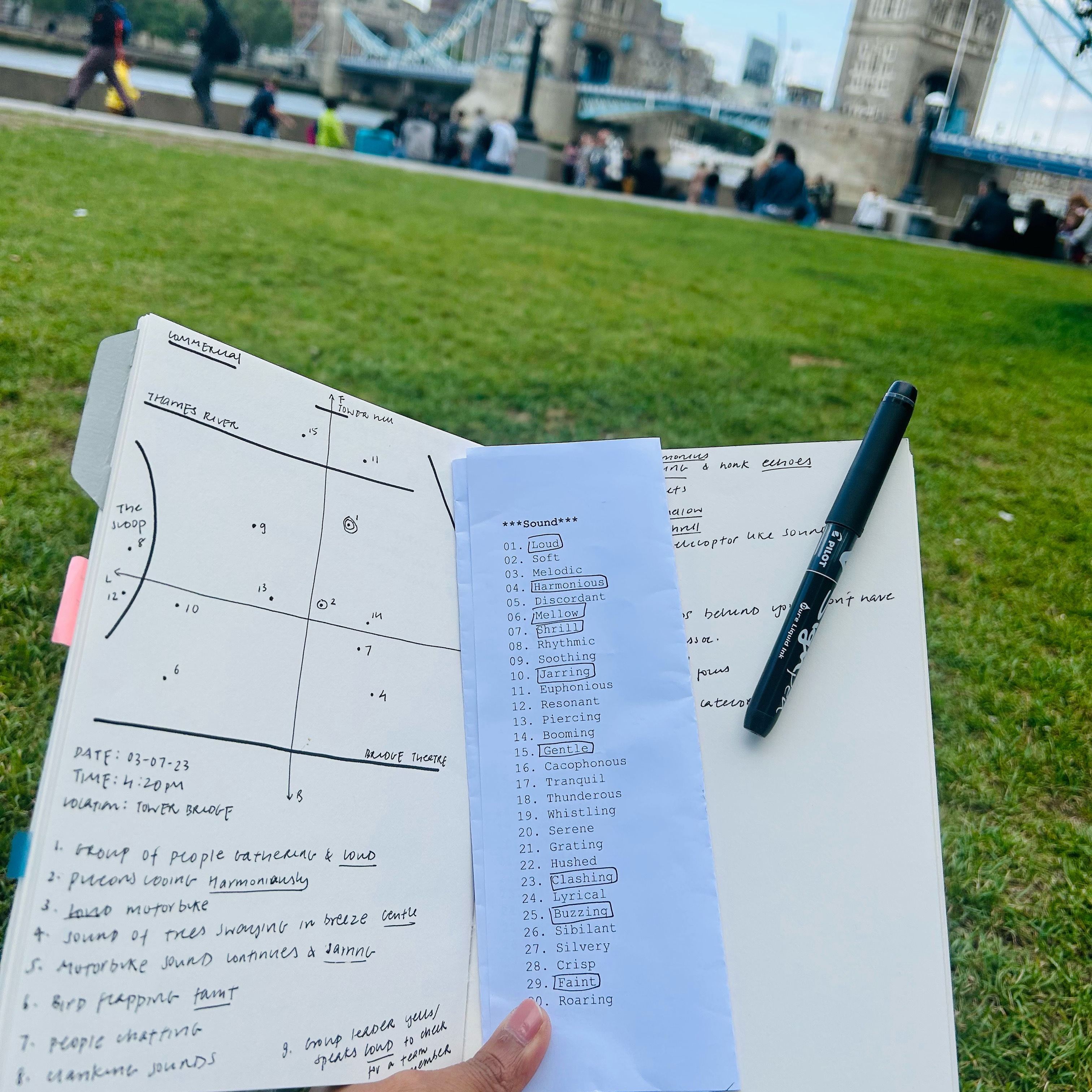
Borrowing from Georges Perec’s notion of exhausting a place (2010), I tested a data collection score focused on prolonged observation and meticulous recording of sensory encounters while remaining stationary. I deliberately chose to isolate different sensory channels and document their aspects such as intensity, reach, temporality, intermingling, and associations.
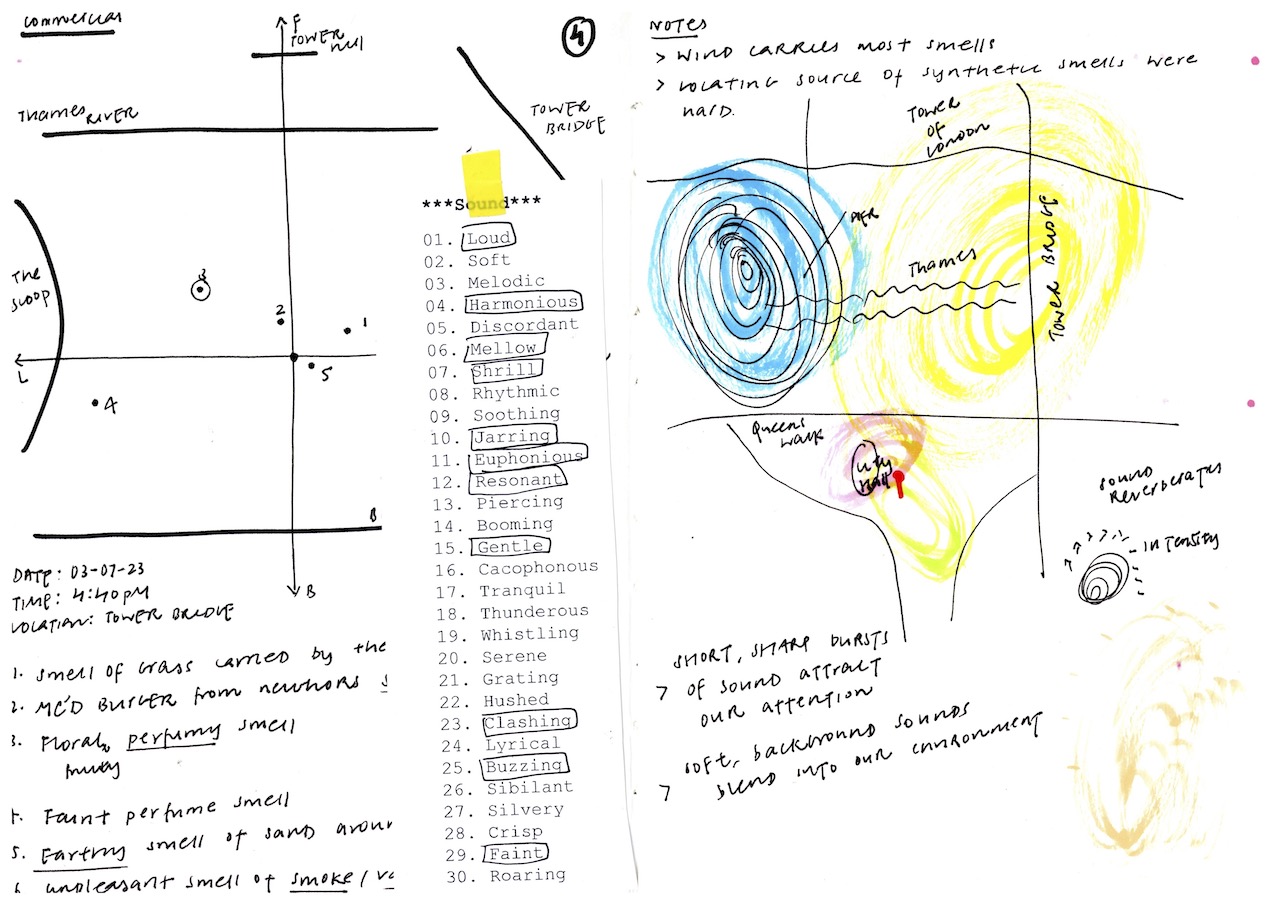
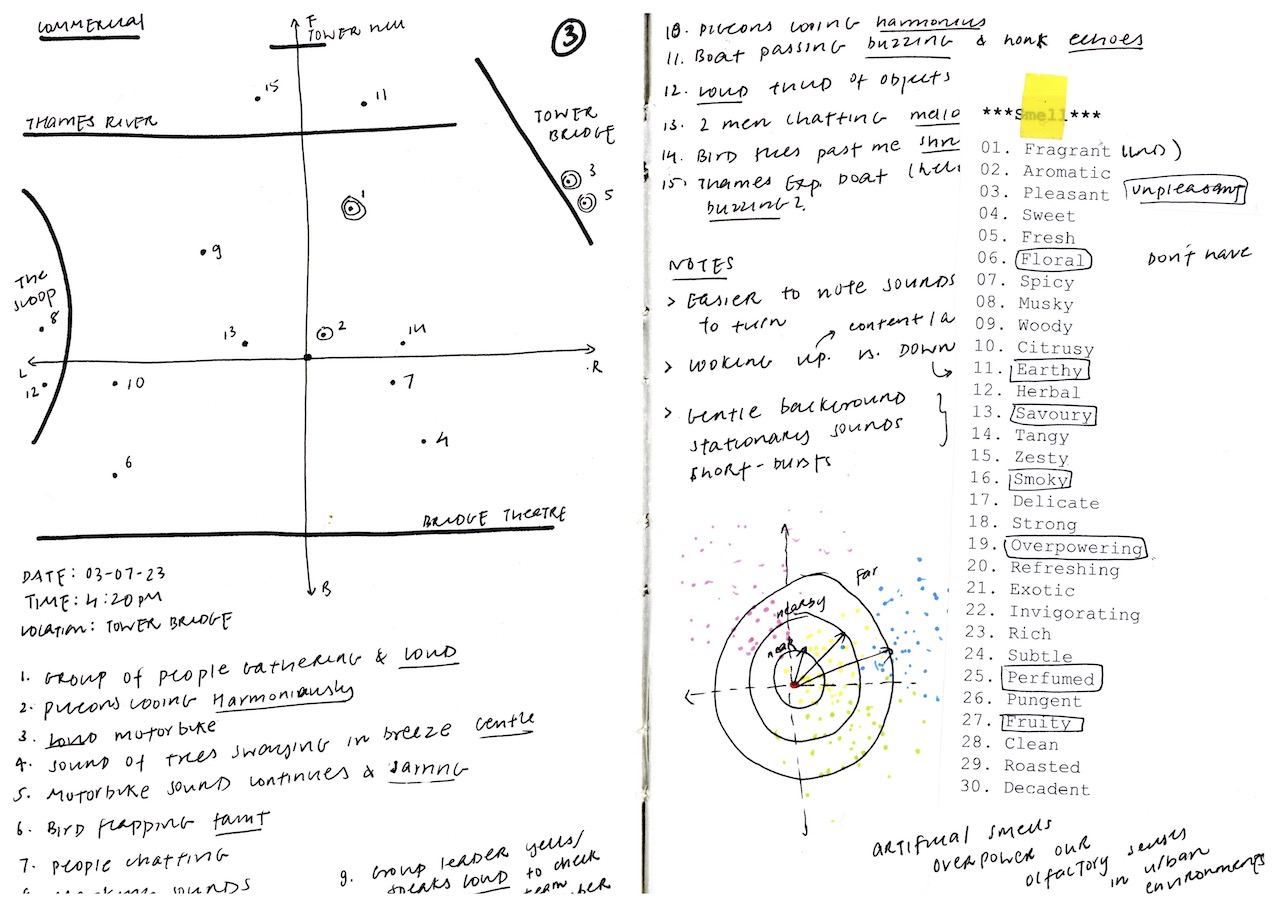
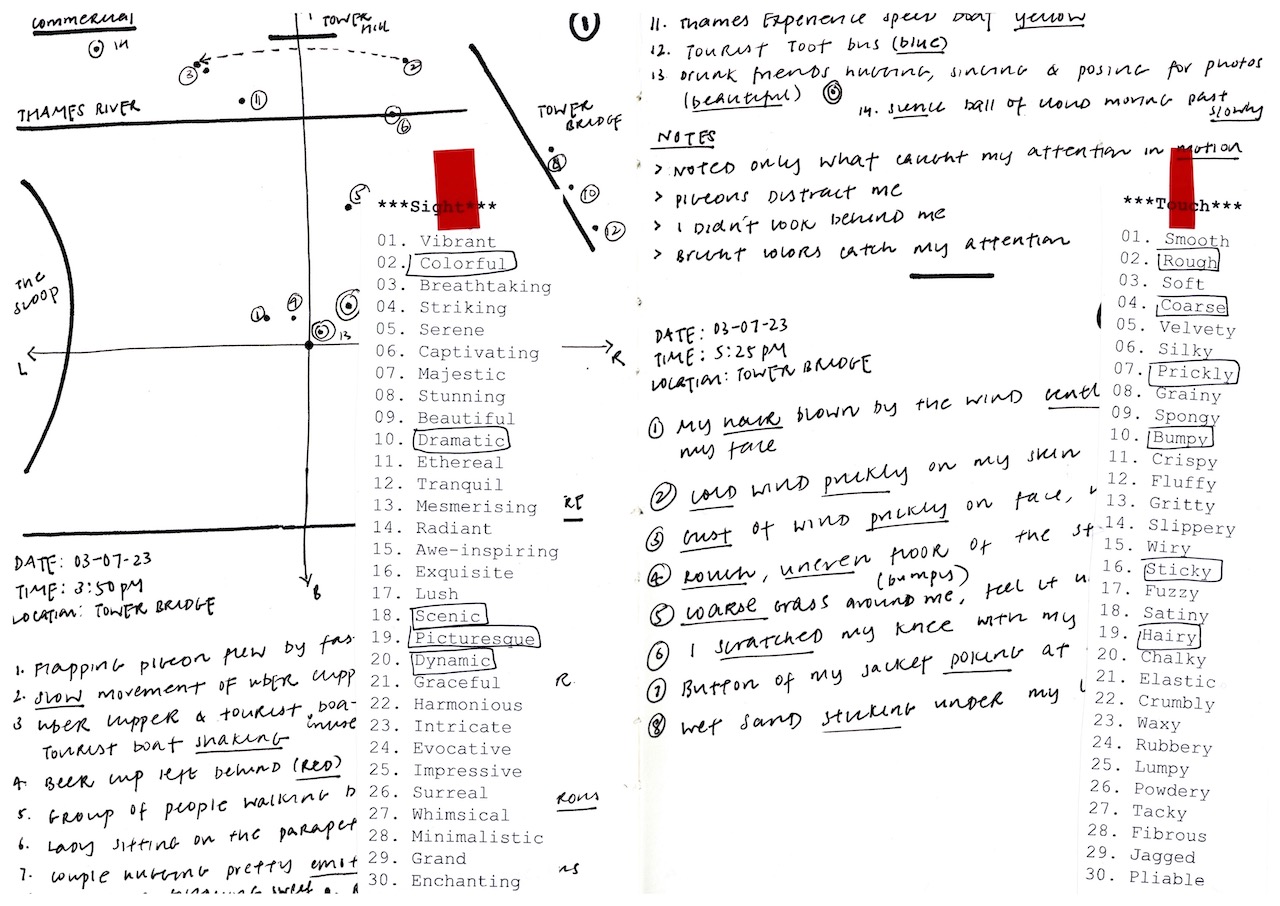
Key findings emerged from this exercise:
- Sensory information carries variably across distances, with sight and sounds having a broader reach compared to the limited range of smell and tactile sensations.
- Certain aspects drew my attention, like vibrant hues or abrupt, loud sounds, whereas it required conscious effort to notice the quieter background noises and subtle scents.
- Environmental conditions can influence the perception of certain senses, such as how the direction of the wind can impact the strength of transported odors.
- Some senses are more likely to be intermingled than others. Sounds, in particular, often overlap and can be associated with movements in the environment.
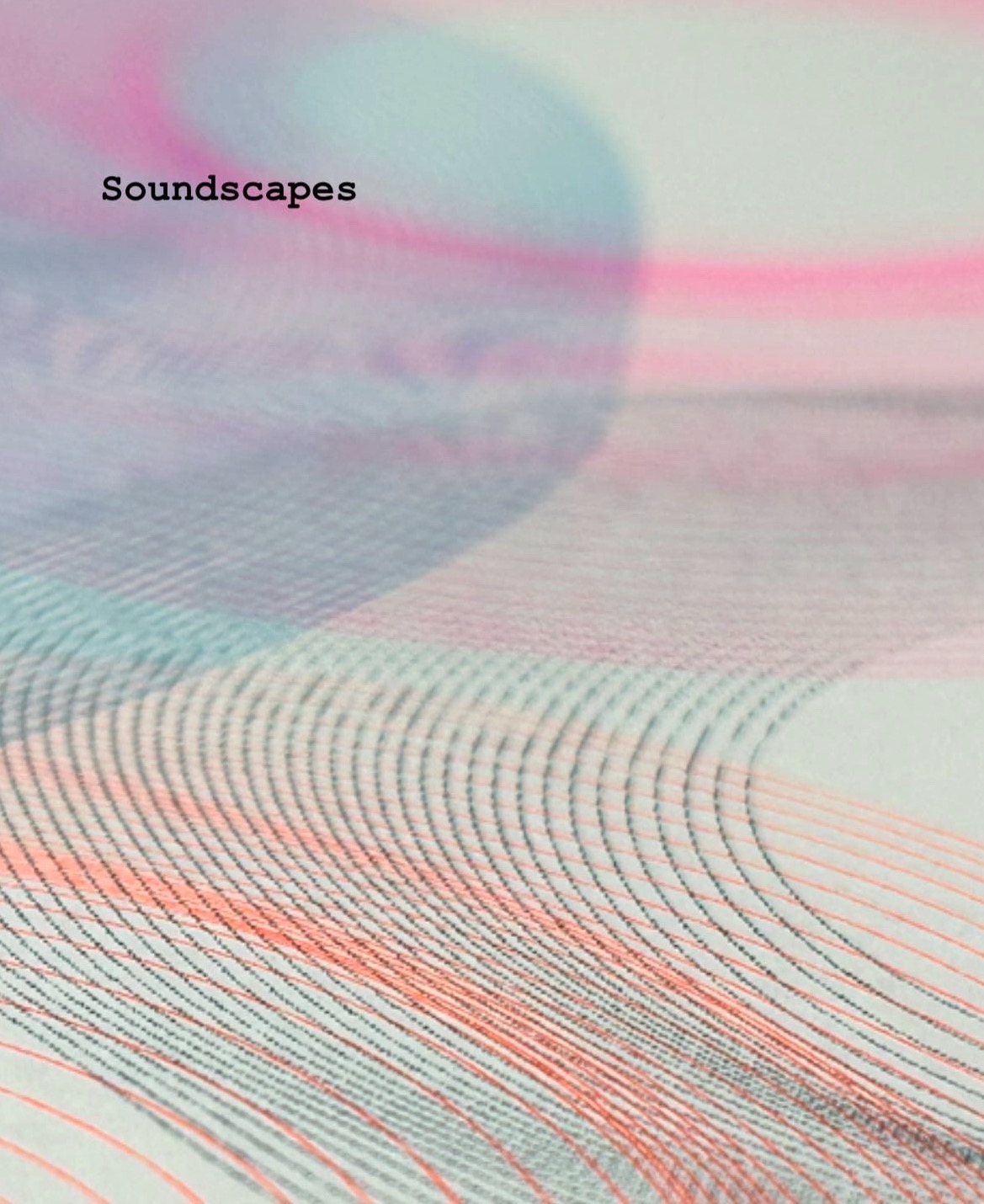
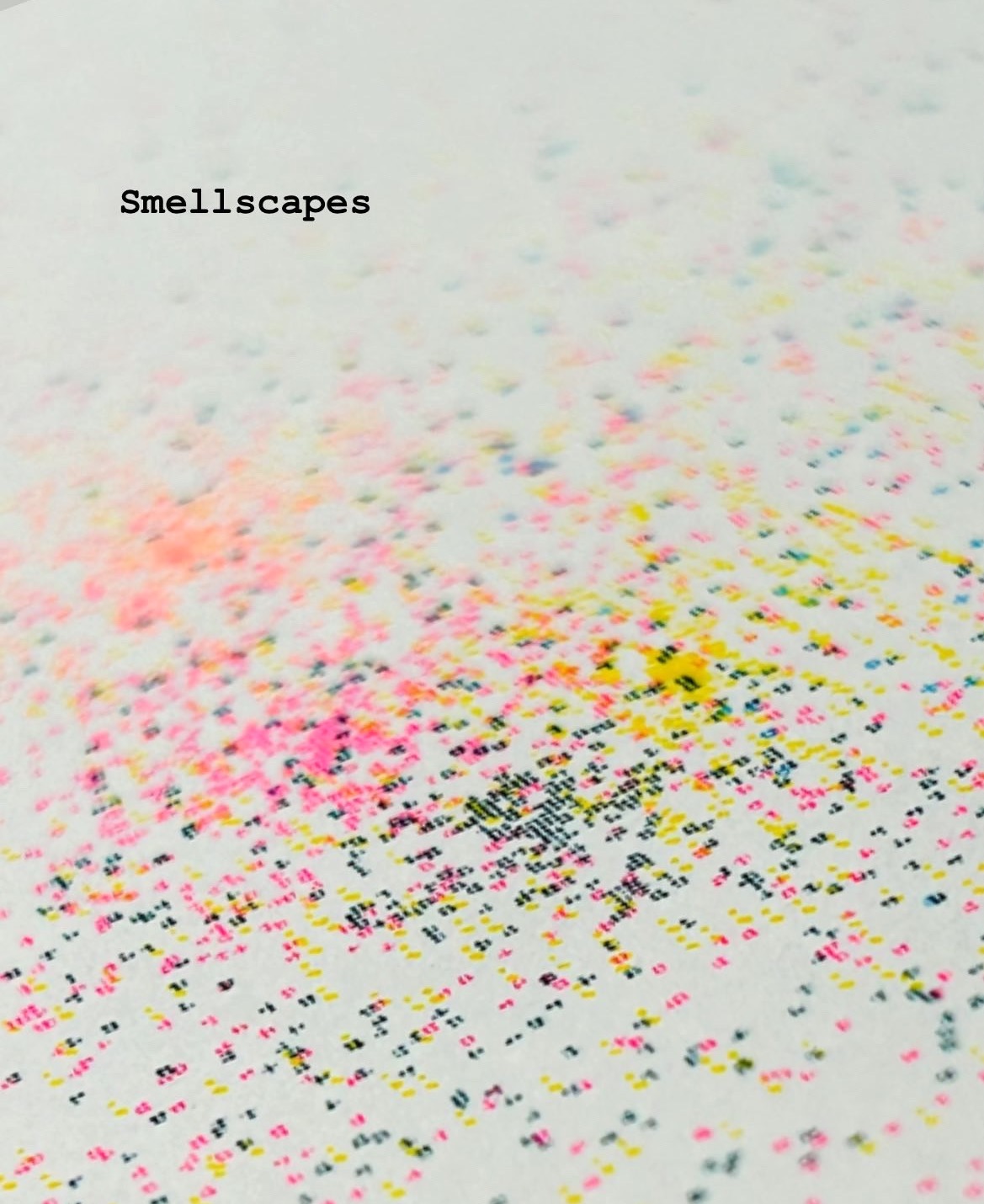
- The information gathered through these exercises was visualised as a series of Risograph prints and exhibited at LCC. The audience’s response was predominantly favorable, sparking conversations about the potential expansion of this framework into a participatory setting.