A Sensory Data Walk
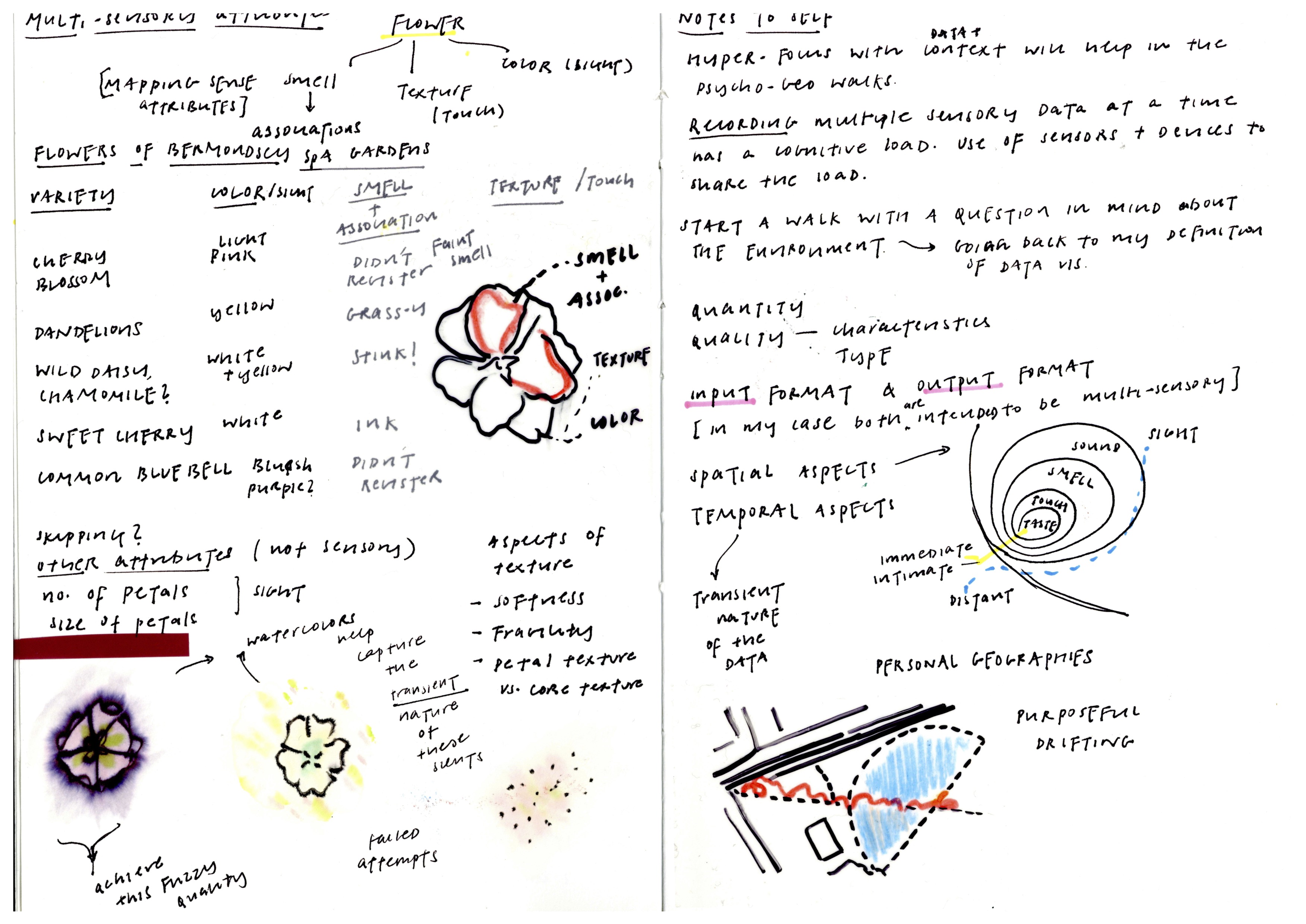
I'm undertaking a series of walks to better understand strategies for observing, collecting, and recording multi-sensory information around us. This research draws from psychogeography, placemaking, and embodied methodologies, seeking to understand the nuances of place through movement, stillness, and shared experiences. I explore how constraint, collaboration, and attention shape our relationship with place.
As an experiment, I undertook a personal sensory walk in Bermondsey Spa Gardens to better understand the complexities of detecting and recording new sensory experiences.
Registering sensory data
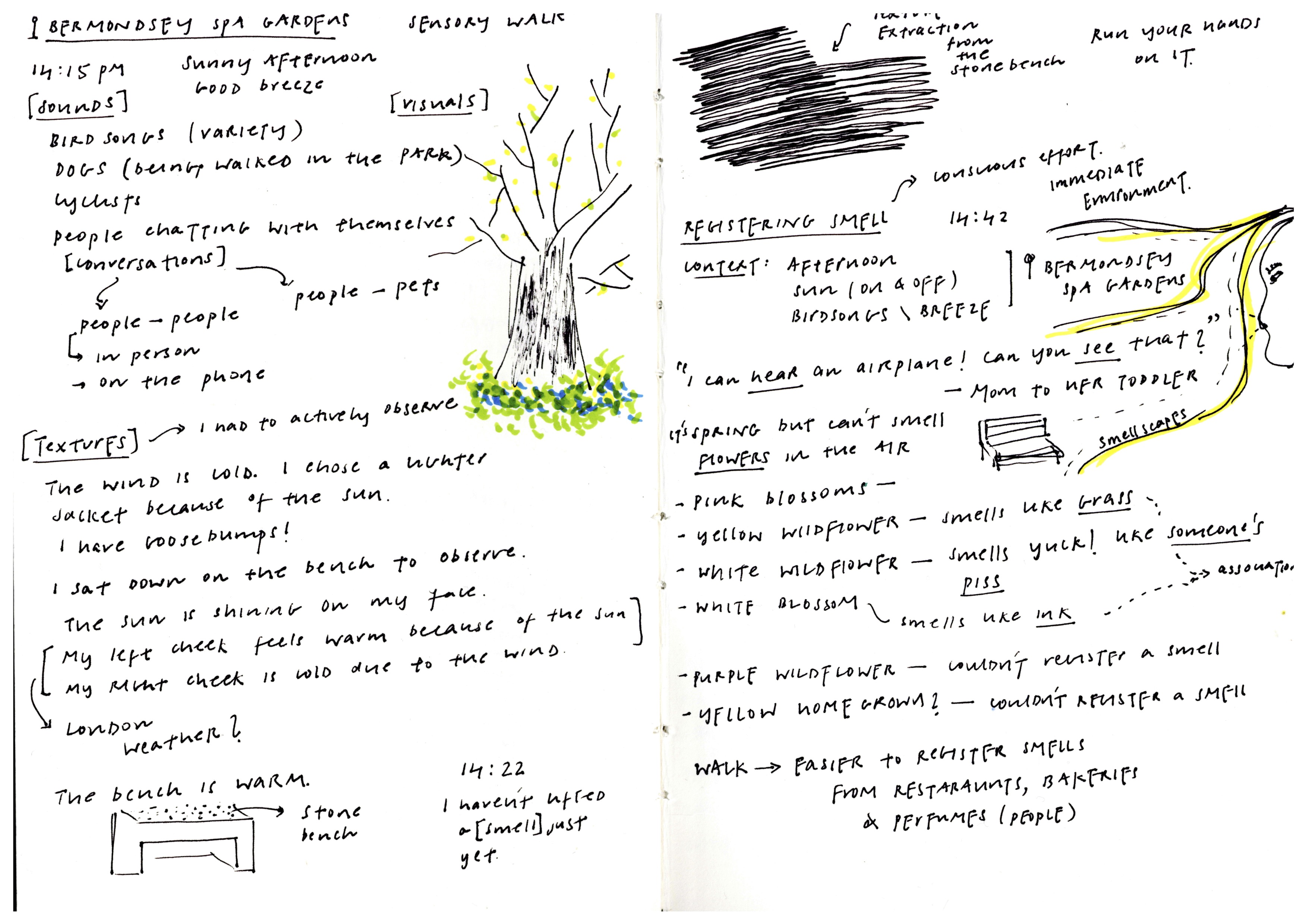
Not picking a particular focus in the beginning, I walked around the gardens trying to capture every sense, quickly getting overwhelmed by the sights and sounds around me. It became gruelling to observe the barrage of stimuli surrounding me, decide which ones I was to capture, and record them fast enough before the next stimuli hit me. Finally, using a recording app on my phone helped ease this pressure, as I could now filter out sounds later with ease.
The spatiality of sensory information became obvious. Most sounds were easily classifiable as distant or near. Smells and touches were close at hand and felt intimate. Smells I could easily detect around me were either the perfumes of people nearby or the smells of food at a distance.
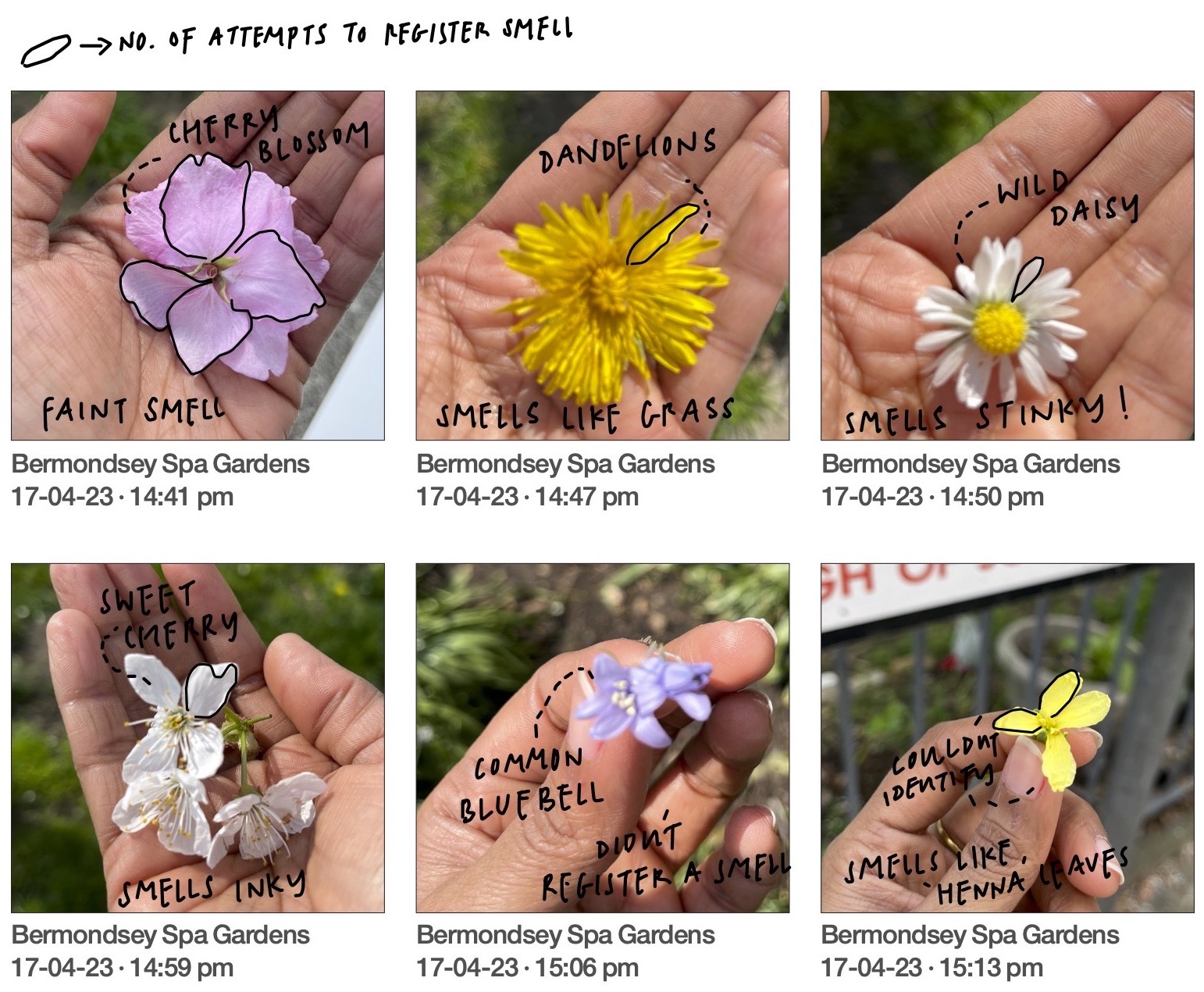
To improve my ability to focus on a particular aspect of the experience, in the next phase I chose a subject to collect sensory information about: flowers. The abundance of spring flowers around made for plenty of data. I smelled the flowers, noted their colors, and felt their texture. An interesting set of thoughts came out of this experience. Being unfamiliar with the flora of the city, I struggled to name unfamiliar smells and fell back on comparing them to analogous smells from my past. Some felt unfamiliar enough to fail any comparison. Faint smells required multiple sniffs with pauses to properly register them.