Asking a Shadow to Dance
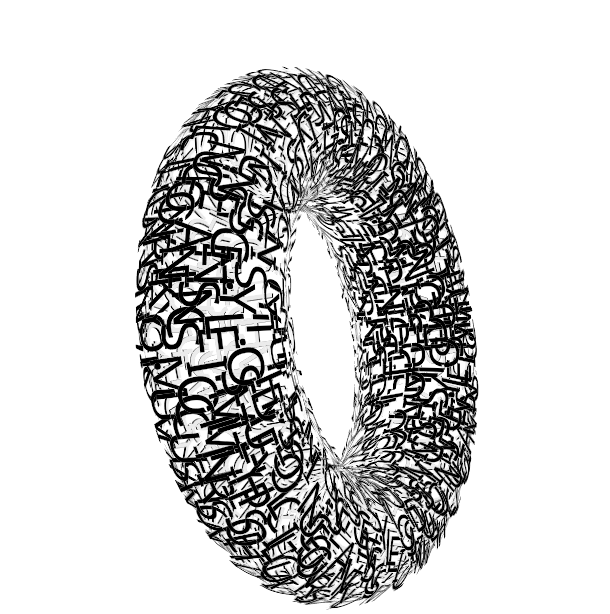
This project envisions Kalidāsā's venerable poetry — Meghadūtam — as interactive, three-dimensional typographic forms, moving through space.
A computational inquiry into how literature is read, felt, and encountered
Dick Higgins wrote that pattern poetry is a story of an ongoing human wish to combine the visual and the literary impulses tied together to experience the aesthetic whole.
This inquiry combines my understanding and interpretation of vernacular poetry as a practicing Bharatanatyam artiste, my interest in expressive typography as a designer and my experience in using code as a creative medium. It seeks to open up alternative ways of reading, feeling, and inhabiting poetic works in the digital space.
Typography has constantly evolved and embraced the changing technological landscape — from print, to digital, to now virtual spaces — pushing the limits of expressivity. While the digital revolution introduced rapid digitalisation of media through screens, the post-digital era will be defined by augmenting the physical world with digital information, reconnecting us back to space in both meaning and beautiful ways. Typography, in this post-digital age, expands the scope of expressivity by embodying spatial, interactive and immersive dimensions.
Poetry makes for an attractive context for experimenting with expressive typography. The condensed, expressive use of language common in poetry and poetic writings gives abundant opportunities for designers to amplify meaning through creative use of type. Poetic text evokes intense, rich imagery using a handful of words, which can be enhanced to render a visual voice to the text. The tendency to synthesise the visual and literary experience seems universal given the myriad explorations achieved through the concrete poetry of the West and chitra-kāvyās of the East.
Indian classical poetry holds a profound cultural significance and are highly charged with rich imagination, providing the necessary substance for experiments in expressive typography. These classical poems have stood the test of time, while being deeply rooted in the Indian historical and cultural context, yet allowing for varied artistic interpretations.
As a dancer, I have read and analysed these works and reimagined them into various choreographies. Recreating these classical pieces in a medium like dance, requires a graceful amalgamation of space, motion and voice in the service of expressing emotion. A similar cultural and aesthetic sensitivity is valuable in reimagining classical poetry through expressive computational typography.
September 2018
September 2018
August 2018